Whether you’re preparing for pregnancy, navigating pregnancy, or healing after birth — this yoga therapy programme is thoughtfully designed to support your body, mind, and emotional well-being at every stage.
1:1 Private Sessions
Yoga therapy for motherhood
Before, during & after —
you deserve support at every stage
Three connected stages
One continuous journey of care
Each stage informs the next.
Tap to explore.
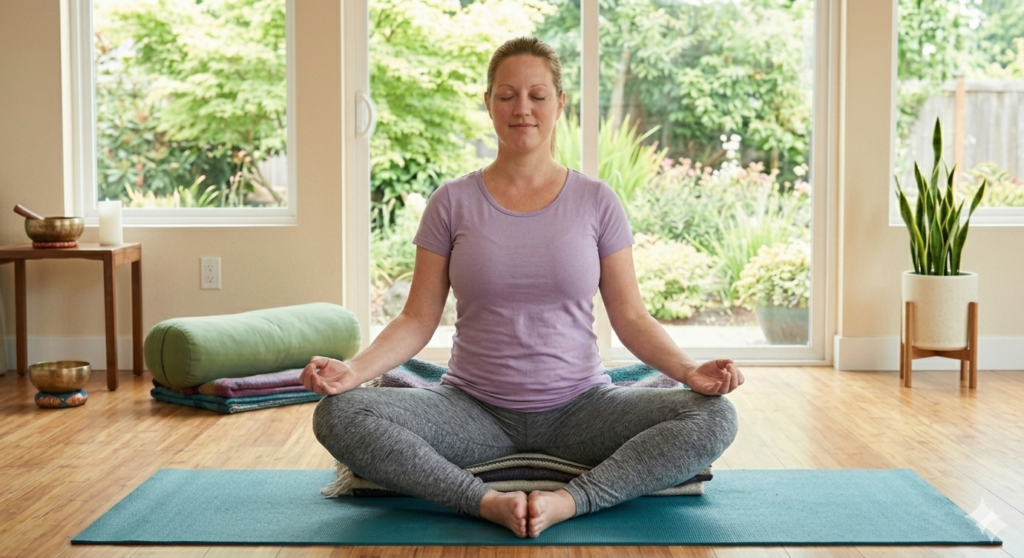
01 Preconception
Preconception yoga therapy is about more than physical readiness —
Stage 01 — Preconception
Prepare your body, Nourish your mind, Open to what's coming.
Preconception yoga therapy is about more than physical readiness — it’s about arriving at pregnancy as whole, grounded, and resourced as possible. Whether you’re just beginning to think about starting a family or actively trying to conceive, this programme supports your body and nervous system through one of life’s most profound transitions.
What we focus on
- Menstrual cycle awareness & regulation
- Hormonal balance through movement & breath
- Pelvic floor health & awareness
- Stress reduction & nervous system reset
- Nourishing sleep and recovery
- Body confidence and self-connection
What's included
- Cycle-synced yoga sequences
- Breath & nervous system practices
- Yoga nidra for deep restoration
- Pelvic floor foundations
- Ayurvedic lifestyle guidance
- Home practice recordings
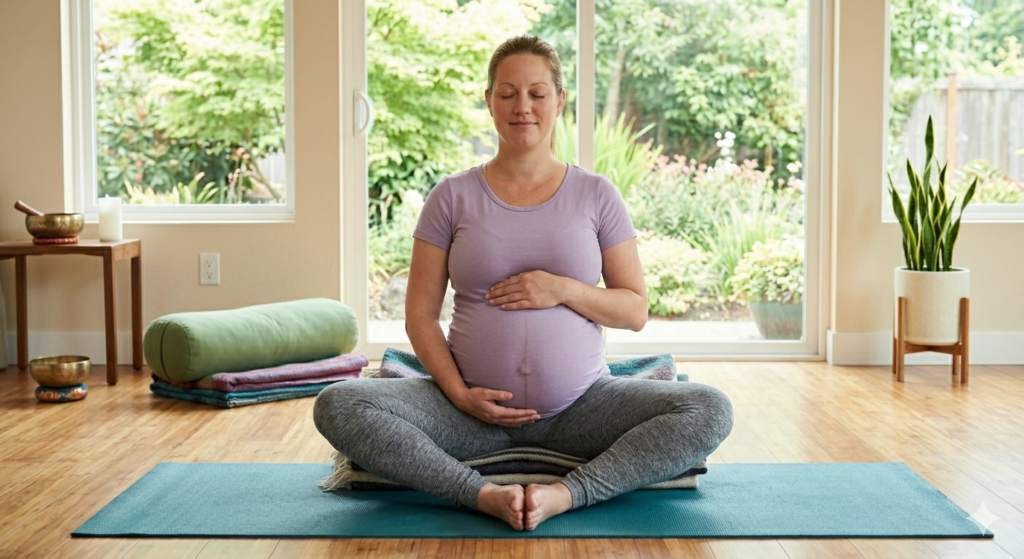
01 Prenatal
Pregnancy is not time to push through, its time to —
Stage 02 — Prenatal
Move with your body. Prepare for the birth ahead
Pregnancy is not the time to push through — it’s the time to listen more deeply than ever. Prenatal yoga therapy meets you trimester by trimester, adapting to the extraordinary changes your body is making and building the strength, awareness and confidence you’ll carry into labour and beyond.
First Trimester
Managing fatigue, nausea and anxiety. Gentle grounding practices to support early hormonal shifts and build foundations.
Second Trimester
Building strength, addressing back pain and SPD, deepening body awareness as your bump grows and centre of gravity shifts.
First Trimester
Birth preparation, optimal baby positioning, breath techniques for labour, and practices to ease the final weeks.
Common conditions we address
- Back pain & sciatica
- Pelvic girdle pain (SPD/PGP)
- Round ligament pain
- Rib tension & breathlessness
- Insomnia & fatigue
- Perinatal anxiety
Birth Preparation includes
- Breath techniques for each labour stage
- Movement & positions for labour
- Optimal foetal positioning
- Pain-coping strategies
- Partner involvement session
- Birth visualisation & yoga nidra
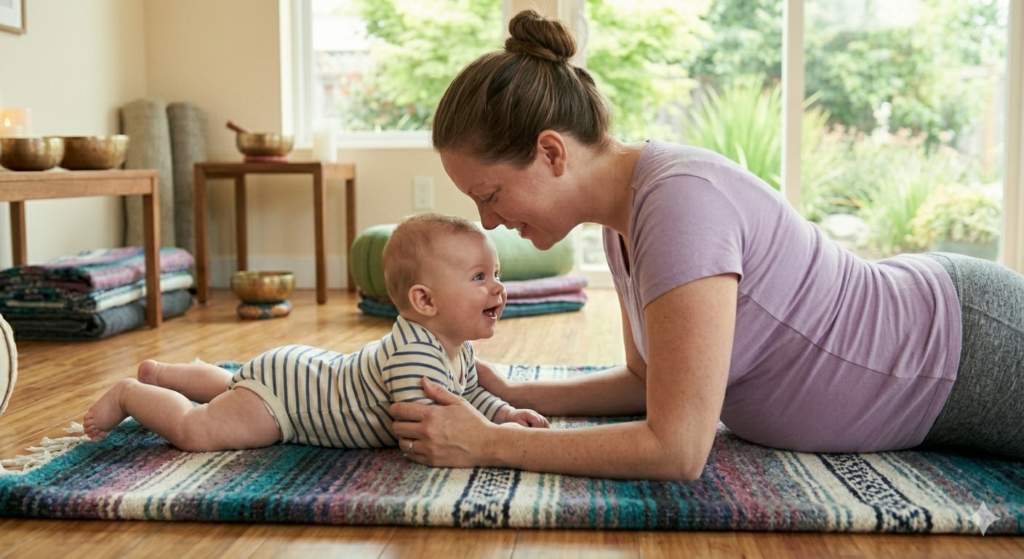
01 Postnatal
Postnatal time is one of the most demanding and –
Stage 03 — Postnatal
Come back to yourself- Slowly, Gently, Fully.
The postnatal period is one of the most demanding and least supported chapters of a woman’s life. Yoga therapy offers a space that is genuinely yours — to rebuild strength safely, process the enormity of what your body has done, regulate your nervous system, and come home to yourself as a mother, and as a person.
0-6
weeks
Breath & pelvic floor awareness, gentle nervous system support, rest-based recovery
6-12
weeks
Progressive core rehab, upper body tension release, diastasis assessment
3-6
months
Functional strength building, return to activity guidance, hormonal rebalancing
6+
months
Ongoing strength, mobility, and mindfulness — growing with you into motherhood
Physical recovery
- Pelvic floor rehabilitation
- Diastasis recti (abdominal separation)
- C-section scar tissue work
- Shoulder, neck & upper back relief
- Progressive core restoration
- Hip and lower back rebalancing
Emotional & nervous system
- Postnatal anxiety & low mood support
- Birth trauma processing
- Sleep and rest practices
- Nervous system regulation
- Identity and self-connection
- Breath-based mood support
BEGIN YOUR JOURNEY
Not sure where you are — or where to start?
Book a free 20-minute discovery call. We’ll talk through your stage, your needs, and the best way forward — with no pressure and no obligation.
Frequently asked questions
Everything you need to know
Browse questions by topic — or scroll through everything below. If you don’t find your answer, book a free discovery call and we’ll talk it through.
01
Before pregnancy
Pre-Conception
FAQs
what it is?
What is preconception yoga therapy and who is it for?
Preconception yoga therapy is a one-to-one therapeutic programme designed to prepare your body and mind for pregnancy — or simply to support deep hormonal and nervous system health at this stage of life. It’s for anyone who is thinking about starting a family, actively trying to conceive, navigating fertility challenges, or wanting to arrive at pregnancy feeling as whole and resourced as possible.
How is preconception yoga therapy is different from other regular yoga classes?
A yoga class gives everyone the same sequence. Preconception yoga therapy is entirely one-to-one and built around your body, your cycle, your health history, and your goals. Sessions are adaptive — responding to where you are in your cycle, how your body is feeling, and what your nervous system needs that week.
Fertility & cycles
Can yoga therapy supports fertility?
Yoga therapy can support the conditions in which conception is more likely — by reducing chronic stress, regulating the nervous system, supporting hormonal balance, improving sleep, and helping you develop a deeper awareness of your cycle. It is not a fertility treatment, and we work collaboratively with any fertility specialists or reproductive health practitioners you are already seeing.
I've PCOS and endometriosis. Can yoga therapy help?
Yes — yoga therapy can be genuinely supportive for both conditions. For PCOS, we focus on stress reduction, nervous system regulation, and cycle-synced movement. For endometriosis, we work with pain management, pelvic floor awareness, and restorative practice during symptomatic phases. Sessions are always adapted to where you are on any given day, and we work alongside your medical team.
I've been through fertility treatment (IVF or IUI) Can I still practice?
Yes, and many clients find yoga therapy to be one of the most supportive things they can do during fertility treatment — both physically and emotionally. We adapt practices carefully around treatment protocols, medication phases, and transfer timing. Please share your treatment schedule and we’ll design your practice accordingly.
Body & mind prep
What does preconception yoga therapy actually involves?
Each session begins with a short check-in about where you are in your cycle and how you’re feeling. From there we move into a practice tailored to that phase — which might include breath regulation, cycle-synced movement, pelvic floor awareness, restorative postures, or yoga nidra for deep rest. Sessions close with a short reflection and a simple home practice to take away.
What is cycle-synched yoga and why does it matter?
The menstrual cycle moves through four distinct phases — menstrual, follicular, ovulatory and luteal — each with different hormonal profiles, energy levels, and needs. Cycle-synced yoga therapy matches the style, intensity and focus of your practice to each phase: rest and restoration during menstruation, building energy in the follicular phase, dynamic movement around ovulation, and grounding practices in the luteal phase. Over time, this builds an intuitive relationship with your body’s rhythms.
Can Yoga therapy help if I have lot of stress or anxiety around trying to conceive?
Absolutely — and this is one of the most common reasons clients come to us. The emotional weight of trying to conceive can be profound, and chronic stress has a measurable effect on hormonal health. Our sessions create a genuinely supportive space where you can put that weight down for a while, and where you’ll learn tools — breath, movement, awareness — that help you regulate between sessions.
Practical information
When should I start preconception yoga therapy?
Any time — there’s no ideal start point. Some clients begin six to twelve months before actively trying; others come because they want to feel better in their bodies right now. Starting earlier gives more time to build a home practice and address any patterns before pregnancy, but beginning at any stage brings real benefit.
How many sessions will I need?
This varies by person and goal. Most clients find a rhythm of weekly or fortnightly sessions, with many choosing to continue through into their pregnancy once it begins. A minimum of four to six sessions gives a solid foundation, and many clients continue as an ongoing practice.
Are session available online?
Yes — all sessions are available online via video call and are just as effective as in-person. You’ll need a quiet space, a mat or soft surface, and a device with a camera. Many clients appreciate the flexibility of online sessions, especially when factoring in cycle phases where travel feels like a lot.
Still have question?
Book a 20 min discovery call – lets talk through your stage and needs
02
During pregnancy
Pre-Natal
FAQs
what it is?
What is prenatal yoga therapy and how it differ from prenatal yoga class?
Prenatal yoga therapy is a one-to-one therapeutic practice built around your specific pregnancy, body, symptoms, and concerns. Unlike a group prenatal class — where the teacher offers a generalised sequence — every session here is designed for you alone. The focus, pace, and content shift with each trimester and each week, adapting to how you feel right now.
Do I need previous experience to start prenatal yoga therapy?
None at all. Many clients come having never done yoga before. Prenatal yoga therapy is not about performing poses — it’s a therapeutic process that uses movement, breath, and body awareness as tools for your health and wellbeing. Wherever you’re starting from is exactly the right place.
When in pregnancy I can start?
At any stage. Many clients begin in the first trimester to manage nausea, fatigue, and early anxiety. Others join in the second trimester when energy returns and the body is changing most noticeably. It’s never too late — beginning at 34 or 36 weeks still brings real benefit for birth preparation and recovery.
Trimesters
How does practice changes across the trimester?
Each trimester has its own focus. In the first trimester we prioritise grounding, rest, and gentle nervous system support — navigating fatigue, nausea, and the emotional enormity of early pregnancy. In the second trimester we build strength, address postural changes, and start pelvic floor preparation. In the third trimester the focus shifts to birth preparation, optimal baby positioning, breath techniques for labour, and practices that support the final weeks of pregnancy.
I am in my first trimester and exhausted - is it still worth starting?
Yes — and first trimester is one of the best times to begin. We adapt the practice completely to your energy levels. Sessions may be shorter, gentler, and more restorative. Even fifteen minutes of breath awareness and supported rest is therapeutic. You don’t need to do much — you need to do the right things.
Pain & discomfort
Can yoga therapy help with back pain and pelvic girdle pain (SPD/DPG)?
Yes — this is one of the most common reasons clients come to us during pregnancy. Targeted therapeutic movement, breath-based pain modulation, and postural re-education can bring significant relief for back pain, pelvic girdle pain, hip tension, rib tightness, and sciatica. We work carefully within safe parameters for your stage of pregnancy.
What other pregnancy discomfort yoga therapy address?
Common conditions we work with include: lower back pain and sciatica, pelvic girdle pain (PGP/SPD), round ligament pain, rib tension and breathlessness, carpal tunnel symptoms, insomnia and fatigue, heartburn aggravated by posture, swelling and circulation, perinatal anxiety, and the emotional complexity of pregnancy after loss. If you’re unsure whether your specific condition is something we can help with, just ask.
Birth preparation
How does prenatal yoga therapy help me prepare for birth?
Birth preparation is central to our prenatal work. We teach breath techniques for each stage of labour, movement and positions to keep your baby well-positioned, tools for managing pain and anxiety during contractions, and practices for staying present when intensity peaks. We also cover what to pack in your birth bag in terms of breath and movement resources — things you’ll actually use.
Can yoga therapy help with fear of birth?
Yes — and this is more common than many people say out loud. Tokophobia (fear of birth) and general birth anxiety are something we address with sensitivity and without pressure. A combination of nervous system regulation, breath practices, gradual exposure through visualisation, and building trust in your body can make a profound difference to how you feel as your due date approaches.
I had traumatic previous birth. Can I still do prenatal yoga?
Yes, and we would work with particular care and sensitivity. Previous birth trauma can shape how you feel about your current pregnancy in ways that deserve acknowledgment and support. Sessions create space for that — at your pace, without pressure. We may suggest working alongside a perinatal therapist or counsellor if appropriate, and we are happy to be part of that wider care team.
Practical info
How often should I attend session during pregnancy?
Most clients attend sessions two to three times per week, especially when seeking consistent support, deeper therapeutic progress, or focused birth preparation in the third trimester. Others may choose a weekly rhythm depending on their schedule and needs. After your initial session, we’ll discuss a frequency that best supports your goals, lifestyle, and stage of journey.
My partner wants to be involved. Can they join?
Yes — and we encourage it. Partners are welcome to join prenatal sessions, especially those focused on birth preparation, breathing practices, relaxation techniques, and ways to support you during pregnancy and labour.
Many couples find that attending a session together helps them feel more connected, informed, and confident as they prepare for birth as a team. It also creates space for shared understanding around the physical, emotional, and practical changes that pregnancy brings.
Are online pre-natal sessions as effective as in-person?
For the vast majority of clients, yes. You’ll need a yoga mat or soft surface, loose comfortable clothing, and a device propped at eye level. The therapeutic relationship, breath practices, movement guidance, and home practice recordings are all fully available online. Many clients in the third trimester actually prefer online sessions — the commute can be a lot when you’re heavily pregnant.
Still have question?
Book a 20 min discovery call – lets talk through your stage and needs
03
After pregnancy
Post-Natal
FAQs
what it is?
What is postnatal yoga therapy and how it differ from Postnatal yoga class?
Postnatal yoga therapy is a one-to-one therapeutic practice designed entirely around your recovery — your birth experience, your body, your timeline, and your emotional landscape. Unlike a postnatal class, there is no sequence everyone follows together. Your sessions are built around what your body specifically needs, whether that’s pelvic floor rehabilitation, diastasis recti work, nervous system regulation, or simply a space to decompress and come home to yourself.
When can I start postnatal yoga therapy?
This depends on your birth experience. After an uncomplicated vaginal birth, gentle breathwork and pelvic floor awareness can often begin within the first one to two weeks. After a caesarean birth or more complex delivery, we generally wait until six weeks and clearance from your midwife or GP — though a planning call can happen at any time. There is no upper limit: postnatal yoga therapy is relevant and beneficial months or even years after birth.
Can I bring my baby to sessions?
Absolutely — especially in the early weeks and months. We fully expect and welcome babies in sessions. We build in flexibility for feeding, settling, and all the wonderful unpredictability of new parenthood. Sessions are never rushed. As your baby grows and you have more independent time, we can also offer sessions without them.
Physical recovery
How does postnatal yoga therapy approach pelvic floor recovery?
Pelvic floor recovery is central to all postnatal work. We begin with breath-led pelvic floor awareness — learning to feel and connect with these muscles rather than simply squeeze them. From there we progress gradually and safely through rehabilitation stages, building coordination, strength, and endurance over time. We work alongside women’s health physiotherapists where relevant and always defer to specialist advice.
I've told I have diastis recti (abdominal seperation). How does postnatal yoga therapy help?
Diastasis recti (abdominal separation) is very common — and far more manageable than many people are told. Yoga therapy takes a specific, progressive approach: beginning with breath and deep core restoration before introducing any load-bearing movement. We avoid exercises that increase intra-abdominal pressure too early (sit-ups, crunches, many traditional ‘core’ exercises) and instead build from the inside out.
I had cesarean section. Can yoga therapy support my recovery?
Yes — and C-section recovery has specific needs that general postnatal advice often misses. We work with breath reintegration (your breathing pattern changes significantly after abdominal surgery), scar tissue mobility once healing is confirmed, gradual core reconnection, and addressing the postural compensations that often develop after a caesarean. We always follow medical guidance on timing.
My upper back, neck, shoulders are in constant pain from feeding and carring. Hips hurt too. Can yoga therapy help?
This is one of the most universal complaints in the postnatal period — and one of the most satisfying to address. We use targeted therapeutic movement, breath-based tension release, and postural retraining to restore ease in the upper body. We also look at feeding positions and carrying habits so you’re not rebuilding tension between sessions.
Emotional wellbeing
Can yoga therapy support postnatal anxiety or low mood?
Yes — this is some of the most important work we do. The postnatal period can bring anxiety, emotional overwhelm, identity shifts, grief for your pre-baby self, and in some cases postnatal depression. Yoga therapy works gently with the nervous system — through breath, somatic body awareness, and restorative practice — to support regulation, rest, and a sense of coming home to yourself. It is not a replacement for professional mental health support, but a meaningful and compassionate complement.
I experienced traumatic birth. Can yoga therapy help me process that?
With great sensitivity, yes. Birth trauma is real, common, and profoundly underacknowledged. Yoga therapy offers a body-based space to begin processing what happened — gently, without pressure, and without requiring you to retell your story in ways that feel harmful. We may work alongside a perinatal therapist or trauma-informed counsellor, and we’ll always follow your lead on pace and depth.
I feel like I've lost myself since becoming a mother. Is that something yoga therapy can help with?
Yes — and it’s something we hear more than almost anything else. The identity shift of becoming a mother is enormous and often unspoken. Yoga therapy offers a space that is genuinely yours: not about your baby, not about recovery metrics, but about you — your body, your breath, your sense of self.
Coaching can support this process deeply as well, helping you navigate the emotional, mental, and identity changes that often come with motherhood. Together, yoga therapy and coaching create space not only for physical recovery, but for reconnecting with yourself, rebuilding confidence, and finding steadiness through a major life transition.
Many clients describe it as one of the first times since birth they’ve felt like a person again — not just a mother.
Birth preparation
How does prenatal yoga therapy help me prepare for birth?
Birth preparation is central to our prenatal work. We teach breath techniques for each stage of labour, movement and positions to keep your baby well-positioned, tools for managing pain and anxiety during contractions, and practices for staying present when intensity peaks. We also cover what to pack in your birth bag in terms of breath and movement resources — things you’ll actually use.
Can yoga therapy help with fear of birth?
Yes — and this is more common than many people say out loud. Tokophobia (fear of birth) and general birth anxiety are something we address with sensitivity and without pressure. A combination of nervous system regulation, breath practices, gradual exposure through visualisation, and building trust in your body can make a profound difference to how you feel as your due date approaches.
I had traumatic previous birth. Can I still do prenatal yoga?
Yes, and we would work with particular care and sensitivity. Previous birth trauma can shape how you feel about your current pregnancy in ways that deserve acknowledgment and support. Sessions create space for that — at your pace, without pressure. We may suggest working alongside a perinatal therapist or counsellor if appropriate, and we are happy to be part of that wider care team.
Practical info
How soon after cesarean can I start?
We typically begin gentle breath and pelvic floor awareness work around four to six weeks post-caesarean, pending clearance from your midwife or GP. Full movement sessions begin progressively after that. Scar tissue work can usually begin from around eight weeks once the wound is fully healed. We will always check in about your healing before progressing.
How many sessions will I need?
There’s no fixed answer. Many clients begin with a focused six-to-eight session block for a specific concern (pelvic floor rehabilitation, diastasis recti, early recovery). Others choose to work through the first year of motherhood as an ongoing practice. After your first session, we’ll suggest a realistic rhythm together.
My partner wants to be involved. Can they join?
Yes — and we encourage it. Partners are welcome to join sessions focused on home practice guidance, nervous system tools for the household, or postnatal recovery exercises you’d like to share. Some couples find a joint session early in the postnatal period helps them understand the recovery process together and builds realistic mutual expectations.
Still have question?
Book a 20 min discovery call – lets talk through your stage and needs